23 Feb 2026
AEPS vs UPI: Understanding Aadhaar-Based Fund Transfers
Nearly 99% of the Indian population holds an Aadhaar Card. Many among those even have it linked to their phone numbers and bank accounts. And now using that very Aadhaar Card, you can even withdraw cash, transfer funds, and check your balance. Thanks to the Aadhaar Enabled Payment System (AEPS), all of this is now possible.
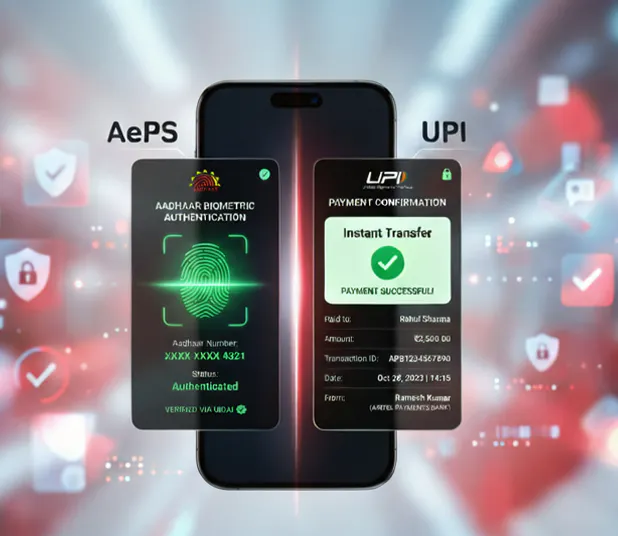
But with the AEPS fund transfer becoming popular, many people are confused as to how it is different from Unified Payments Interface (UPI). Here, we will break down the differences between the two by comparing their features, security, ease of use, and suitability for different groups of people.
What is AEPS?
Aadhaar Enabled Payment System (AEPS) is a bank-led payment system, allowing users to do transactions using their Aadhaar Card number and biometric authentication (a fingerprint or iris scan). Launched by the National Payments Corporation of India (NPCI), AEPS makes banking easier for those without smartphones or debit cards, such as the rural and semi-urban population of India.
Key Features of AEPS
- You don’t need your smartphone, card, or PIN
- Works with only Aadhaar-linked bank accounts
- Transactions are carried out through micro-ATMs
- Biometric authentication ensures security
- You can withdraw money, transfer funds, and check your balance
What is UPI?
Unified Payments Interface (UPI) is undoubtedly the most popular payment method in India, enabling users to make digital payments with just their smartphones. Also developed by the NPCI, it allows people to link multiple bank accounts to a single mobile app, like the Airtel Thanks app, and transfer money instantly.
Key Features of UPI
- You don’t need a physical card or bank account details
- Works with bank accounts linked to your UPI app
- UPI transactions are carried out via Virtual Payment Address (VPA)
- In-app authentication or PIN ensures secure payments
- You can shop online, pay bills, transfer money, etc.
The Bottom Line
While UPI transactions will always have their place, the Aadhaar Enabled Payment System (AEPS) makes a lot more sense for the rural population without smartphones. It offers a secure and seemingly simple way to access basic banking services without having to disclose their banking details or needing a debit card.
FAQs
- Can I use AEPS without an Aadhaar Card?: No, you need your Aadhaar Card number for AEPS, along with biometric authentication.
- What all transactions can be done via AEPS?: It allows basic banking services, such as cash withdrawals, balance enquiries, and fund transfers.
- Which is safer, UPI or AEPS fund transfer?: Both are safe. While UPI transactions rely on two-factor authentication, AEPS requires biometric authentication, like fingerprint or iris scan.